
- Home
-
Products
-
Product collection
-
- Application
- OEM&ODM
- News
- About Us
- Contact Us

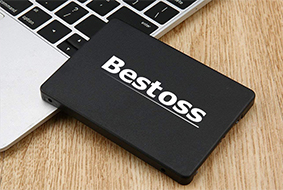
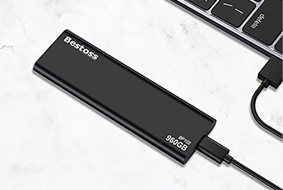
When upgrading your computer's storage or building a new desktop, do you ever find yourself torn between an SSD and an HDD? HDDs used to be the absolute mainstream in the storage market, but now, with the maturity of SSD technology and the increase in suppliers, they have become the first choice for many. However, it's not a simple either/or choice; the key is choosing the right one, not necessarily the most expensive, and considering your usage scenario.
For most users, the speed of a storage device directly impacts the user experience. In this respect, the difference between SSDs and HDDs is particularly pronounced. SSDs rely on flash memory chips to transfer data, free from the constraints of mechanical movement, resulting in read/write speeds far exceeding those of HDDs: A standard SATA SSD can achieve sequential read speeds exceeding 500MB/s, while mainstream HDDs only reach around 100MB/s; if you choose a Bestos PCIe 4.0 SSD, sequential read speeds can even exceed 7000MB/s.
In practical scenarios: Installing an operating system on an SSD allows the computer to boot in about 10 seconds, and large software like Photoshop and Premiere Pro responds almost instantly; while installing an operating system on an HDD often takes over 40 seconds to boot, and loading large software requires patiently waiting for the progress bar. If you are an office worker, designer, or gamer who prioritizes a highly efficient and smooth user experience, an SSD is undoubtedly the better choice; however, if you only use it to store infrequently used documents and movies and don't require high speed, an HDD can also meet your needs.

Many people worry about the "short lifespan of SSDs," but this concern needs to be considered in the context of usage scenarios. SSD flash memory chips have a fixed number of erase and write cycles, and the industry uses TBW (Total Write Time) to measure their lifespan. The TBW of a typical consumer-grade SSD is generally sufficient for daily use—for example, the Bestoss 1TB SATA SSD has a TBW of up to 60TB, which, based on 50GB of writes per day, can be used stably for more than 3 years, far exceeding the replacement cycle of most users. HDDs have no limit on the number of write cycles, and theoretically have a longer lifespan as long as the mechanical parts don't fail. However, their durability is far inferior to that of SSDs.
HDDs have high-speed rotating platters and read/write heads inside, making them susceptible to damage from even minor bumps or vibrations, resulting in a higher risk of data loss. SSDs, on the other hand, have no mechanical parts and are extremely resistant to shock and vibration. Bestoss SSDs have all undergone a 1.5-meter drop test, making them suitable for mobile applications such as laptops and outdoor devices. Simply put: for desktop computers used for long-term storage, the lifespan advantage of HDDs is evident; however, for mobile devices and high-frequency usage scenarios, the durability of SSDs is more reliable.
Price is a crucial consideration for many users. Although SSD prices have dropped significantly in recent years, HDDs are still more affordable for the same capacity – for example, a 1TB HDD costs less than 200 yuan, while a 1TB SATA SSD costs around 300 yuan, and PCIe SSDs are even more expensive. However, in terms of "cost-effectiveness per unit speed," SSDs are superior. If your need is for "large-capacity, low-cost storage," such as storing large amounts of movies or backing up data, the large capacity of an HDD makes the cost per GB lower. However, if you're using it as a system drive or a drive for frequently used software installations, and prioritize speed, an SSD offers better value. Bestoss recommends that users with limited budgets consider an "SSD + HDD" combination: use a smaller SSD for the operating system and frequently used software, and a larger HDD for data storage, balancing speed and cost.
Beyond core differences, choosing the right option based on your usage scenario will result in a superior experience:
Long-term storage scenarios: For backing up family photos, movie collections, project archives, etc., HDDs are the priority. They offer large capacity, low cost, and data security is guaranteed as long as they are properly stored.
Short-term, high-frequency usage scenarios: For transferring office documents, installing games, video editing, etc., SSDs are more suitable. High-speed read and write operations significantly improve efficiency. Ution-Best's PCIe series SSDs are particularly well-suited for high-load scenarios.
Mobile storage scenarios: If you need to transfer files between different computers, portable SSDs are the priority. They are small, lightweight, shock-resistant, and durable. Our portable SSDs also support encryption, making data more secure.
Whether choosing an SSD or HDD, a reliable supplier is key to quality. As a manufacturer with many years of experience in the storage field, we not only offer a full range of SSD products (covering SATA, PCIe, portable, and other types), but also have a comprehensive quality control system—every SSD undergoes rigorous RDT reliability testing to ensure long-term stable operation. Bestoss also offers customized services based on user needs, comprehensively adapting to different scenarios from capacity and interface to appearance design.
In reality, there's no absolute superiority or inferiority between SSDs and HDDs; it's all about whether they suit your needs. Hopefully, this analysis will help you find the most suitable storage solution for your requirements. If you're still unsure which option to choose for your specific needs, please contact our team for personalized selection advice.


By continuing to use the site you agree to our privacy policy Terms and Conditions.
 Language