- Home
-
Products
-
Product collection
-
- Application
- OEM&ODM
- News
- About Us
- Contact Us

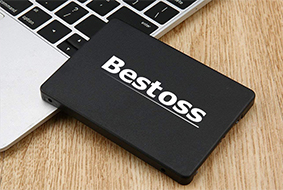
In server rooms, office computers, and industrial control equipment, 2.5-inch storage devices remain the mainstream choice. Many users struggle with the choice: traditional hard disk drives (HDDs) or 2.5-inch SSDs? Based on Ution-Best's experience serving thousands of overseas clients, the answer is clear—SSDs generally have a longer lifespan than HDDs. The core reason is that SSDs have no moving parts such as read/write heads and platters, completely avoiding the mechanical failures most common in HDDs. However, SSD lifespan is not a fixed value. How long can they actually last? What factors affect their durability? Today, we'll clarify this based on Ution-Best's product testing data.
HDDs have significant lifespan limitations: the high-speed rotating platters and read/write heads are prone to failure due to vibration and wear. The mean time between failures (MTBF) is typically between 500,000 and 1,000,000 hours. In actual use, bad sectors and read/write slowdowns may appear after 3-5 years. U-Sensitive 2.5-inch SATA SSDs, with their mechanical-free design, boast an MTBF exceeding 2 million hours. Commercial-grade products commonly operate stably for over 5 years in typical office environments, while industrial-grade models can even meet long-term usage needs of over 10 years. We conducted a comparative test for an overseas data center: under the same conditions, after 3 years of operation, 18% of 100 HDDs failed; while only one of the 100 U-Sensitive 2.5-inch SSDs showed performance degradation and remained usable. For enterprises prioritizing business continuity, the low failure rate of SSDs offers advantages far beyond "longer lifespan," reducing maintenance costs and the risk of data loss.

SSD lifespan is not simply a "factory setting," but is determined by flash memory type, over-provisioning, temperature, and usage intensity.
1. NAND Flash Memory Type: The "Inherent Foundation" of Durability
The type of flash memory directly determines the number of write cycles (P/E cycles) an SSD can withstand. Among the three common types of flash memory in the industry, SLC (Single-Level Cell) is the most durable, with P/E cycles exceeding 60,000; MLC (Multi-Level Cell) is around 3,000; and the currently mainstream 3D TLC (Triple-Level Cell) is around 3,000. However, SLC is too expensive, making it difficult to popularize in consumer and general commercial products.
Ution-Best adopts a "scenario-based NAND flash selection" strategy: industrial-grade 2.5-inch SSDs use SLC NAND flash, suitable for harsh scenarios with high temperatures and high-frequency writes; commercial and consumer-grade products use high-quality 3D TLC NAND flash, combined with its self-developed pSLC caching technology, improving actual durability to near MLC levels. A 1TB capacity product can achieve a total write volume (TBW) of over 600TB, meeting the needs of most users.
2. Over-provisioning (OP): "Hidden Space" for Extended Lifespan
OP space is reserved capacity in an SSD that is inaccessible to users. It is mainly used for wear leveling, garbage collection, and error correction. The higher the OP ratio, the longer the SSD's lifespan. The industry default OP (Operational Power) ratio is approximately 7%. We adjust this based on product positioning: commercial-grade 2.5-inch SSDs retain 7%-16% OP space, while industrial-grade SSDs increase it to 15%-28%. By optimizing space utilization through controller algorithms, we extend SSD lifespan by over 30%.
For a concrete example: For a 1TB 2.5-inch SSD, a typical product has about 70GB of OP space, while the Usonic industrial-grade model boasts over 200GB of OP space. In high-frequency write scenarios, the latter's lifespan can be 2-3 years longer than the former, which is the core reason why many overseas industrial customers specify Usonic products.
3. Temperature: The "Hidden Killer" Accelerating Wear and Tear
Temperature has a far greater impact on SSD lifespan than imagined. Real-world testing data shows that SSDs operating at temperatures above 50℃ for extended periods will experience a 15% reduction in lifespan; if the temperature reaches 80℃, the lifespan may be shortened by more than 30%. While HDDs have a safe operating temperature limit of only 60℃, and SSDs can withstand higher temperatures, prolonged exposure to high temperatures will still accelerate flash memory aging. U-Speed's 2.5-inch SSD features a specially optimized heat dissipation design: commercial-grade products use an aluminum alloy casing to control operating temperatures between 0-70℃; industrial-grade models support a wide operating temperature range of -40℃ to 85℃, coupled with an intelligent temperature control algorithm that automatically adjusts read and write speeds to cool down in high-temperature environments, ensuring stable and durable performance even in extreme scenarios such as workshops and outdoors.
4. Usage: A "Direct Variable" in Lifespan Consumption
The lifespan of an SSD is directly linked to the number of write cycles; high-intensity writing accelerates wear and tear. For typical office users, daily write volumes are only a few GB, so a 1TB SSD can last 5-8 years; however, in high-frequency scenarios such as data centers and video editing, daily write volumes reach tens or even hundreds of GB, potentially shortening the lifespan to 3-5 years. To cater to diverse user needs, Ution-Best offers differentiated products: commercial-grade SSDs for general users with TBW values suitable for daily use; and high-performance models for professional scenarios, which, through enhanced NAND flash quality and OP space, can operate stably for over 3 years even with 200GB of writes per day, and support SMART functionality for real-time wear monitoring, allowing users to predict lifespan.
2.5-inch SSD Actual Lifespan Reference and Warranty Commitment
Considering the above factors, the normal lifespan of 2.5-inch SSDs varies significantly: ordinary commercial-grade products can last 3years in daily office and home scenarios; Ution-Best's industrial-grade models can still achieve 5-10 years of stable operation under harsh environments; however, under extreme conditions of high temperature and high-frequency writes, the lifespan may be compressed to 2-3 years. It is worth noting that warranty service is a crucial guarantee for SSD lifespan. Ution-Best's entire 2.5-inch SSD series offers a 3-year warranty, providing greater peace of mind for overseas users.
Choosing a 2.5-inch SSD doesn't mean blindly pursuing the "longest lifespan," but rather matching the product to your usage scenario. Ution-Best can customize 2.5-inch SSD solutions to suit your needs, balancing lifespan, performance, and cost. For specific product lifespan parameters, please visit the Ution-Best website and contact the sales team.
hat ensure they will last at least as long as the warranty period, which can range from 3-5 years or more.


By continuing to use the site you agree to our privacy policy Terms and Conditions.
 Language