
- Home
-
Products
-
Product collection
-
- Application
- OEM&ODM
- News
- About Us
- Contact Us


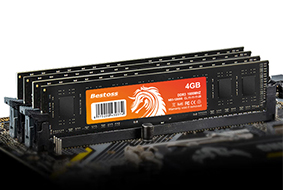
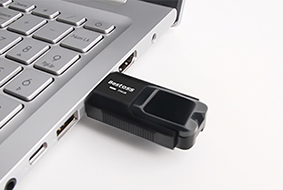
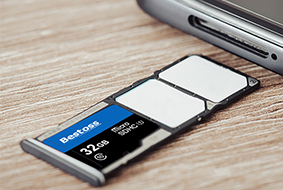
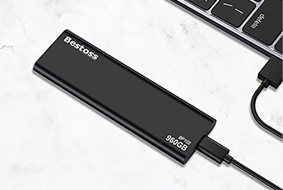
In the storage industry, "data security" and "long-term stability" are always the core demands of users. A memory card suddenly dropping frames during outdoor shooting, or a solid-state drive unexpectedly crashing in a server, can cause irreparable losses. RDT testing is the "core line of defense" protecting the stability of storage products. Many people are unfamiliar with RDT testing, but the logic of Reliability Demonstration Test (RDT) is quite intuitive: like the "violent road test" before a car leaves the factory, it simulates the intensity of ten years of normal user use in just a few days, identifying potential faults in storage products in advance, ensuring that every product leaving the factory can withstand the test of time.
I. Why is RDT testing a "must-pass threshold" for storage products?
For storage products, "short-term usability" and "long-term stability" are two different things. Ordinary consumers may have encountered situations like this:
A newly purchased memory card works fine for the first few months, but after six months, files suddenly become corrupted and read/write speeds slow down; in industrial scenarios, solid-state drives suddenly experience data loss after running continuously in high-temperature workshops for six months—these problems are essentially caused by insufficient long-term product stability. The core function of RDT (Reliable Data Delivery) testing is to expose long-term risks before the product leaves the factory. In the storage industry, products that haven't undergone rigorous RDT testing may have a long-term failure rate as high as 5%-8%; while products that have undergone standard RDT testing can have a failure rate directly controlled below 0.3%.
For buyers, choosing storage products that have undergone RDT testing can significantly reduce subsequent after-sales maintenance costs; for end users, this means that photos, engineering data, and surveillance videos stored on the device can remain safe and stable for several years, without worrying about them failing midway. This is why U-Link makes RDT testing a mandatory requirement for all categories of storage products, from consumer-grade memory cards to industrial-grade solid-state drives, without exception.

II. RDT Testing Process: From Environment Simulation to Data Verification, Every Step is Meticulous
A complete RDT test is not simply "running a read/write test," but a comprehensive verification system covering "environment, load, and data." Solution Best's testing process has been refined through 18 years of industry experience, precisely matching the usage needs of different scenarios:
1. Pre-test Scenario Calibration: Before testing, the technical team sets specific test standards based on the product's application scenario—for example, for memory cards used in outdoor cameras, the focus is on simulating "-20℃ low temperature + frequent insertion and removal"; for solid-state drives used in industrial control, the focus is on "85℃ high temperature + 24-hour uninterrupted read/write"; for consumer-grade products, the high-frequency usage scenarios of daily office work and audio-visual storage are referenced to ensure the test is realistic.
2. Extreme Environment Replication: Through a professional testing chamber, the harsh environments that storage products may encounter are precisely simulated—including a wide temperature range of -40℃ to 85℃, 90% high humidity, and sudden temperature changes. For example, when testing industrial-grade memory cards, they are first run continuously at 85℃ for 48 hours, then instantly switched to a -20℃ environment to test the temperature resistance of the chip and interface, preventing poor contact or performance degradation in complex environments such as outdoors or in workshops.
3. High-Intensity Read/Write Pressure Testing: This is the core of RDT testing. Under extreme conditions, the testing equipment performs "saturation" read/write operations on the storage product—for example, a 128GB memory card is continuously subjected to "write-erase" cycles, accumulating over 10TB of read/write volume (equivalent to the total read/write volume of an average user taking 100 high-definition photos per day for ten years). This "extreme pressure" quickly tests the write/erase life of the flash memory chip, the scheduling capabilities of the controller chip, and filters out products with "hidden defects."
4. Comprehensive Data Monitoring: During testing, the device collects over 20 core data points in real time—including read/write speed fluctuations, power consumption changes, chip temperature, and interface transmission stability. If any data anomalies are detected, the system immediately flags the product and pauses the test. After the test, the technical team conducts a post-test analysis to generate a detailed test report, ensuring that every qualified product can be traced back to the entire testing process.
III. RDT Testing Equipment: Dual Guarantee of Efficiency and Accuracy Professional testing relies on robust equipment
Bestoss's self-developed RDT testing platform boasts significant efficiency and compatibility advantages in the industry, perfectly matching the testing needs of mass production:
• High-Speed Parallel Testing Capability: A single device can simultaneously test 1120 SSDs, nearly 20 times more efficient than traditional equipment that tests only a few dozen at a time. This means a significant reduction in testing cycles for bulk orders—for example, testing 100,000 SSDs, which previously took 15 days, can now be completed in 7 days, ensuring rapid response to customer delivery needs.
• Full-Scenario Compatibility: The device supports all interface types including SATA, NVMe, TF, and SD, ensuring accurate testing for everything from small 16GB micro memory cards to large 4TB solid-state drives. It is also compatible with different specifications of consumer-grade and industrial-grade products, eliminating the need for frequent switching of test equipment and reducing testing errors.
• Precise Control in Extreme Environments: The test chamber achieves precise temperature control from -40℃ to 85℃, with a humidity adjustment range covering 30% to 90%. It can also simulate complex environments such as sudden temperature changes and humid heat cycles, achieving 5% higher control accuracy than industry-standard equipment, ensuring test results are closer to real-world usage scenarios.
For Bestoss, RDT testing is not an "additional cost," but a core manifestation of responsibility to customers. In addition to RDT testing, the product undergoes 12 full-process quality inspections, with strict standards controlled at every stage from chip selection and PCB design to finished product assembly. It is this dedication to quality that makes our storage products the first choice for many industry customers.
If you would like to learn more about the technical details of RDT testing, or if you need to customize a highly stable storage product for a specific scenario, please visit our website https://www.ution-best.com to contact our team for one-on-one solution consultation and sample testing services.


By continuing to use the site you agree to our privacy policy Terms and Conditions.
 Language