
- Home
-
Products
-
Product collection
-
- Application
- OEM&ODM
- News
- About Us
- Contact Us

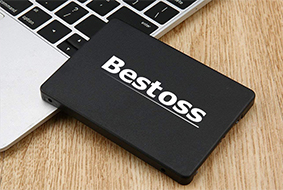
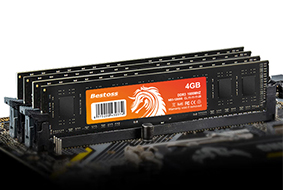
The current DDR5 upgrade trend in the PC market is no longer an "optional trend," but an "inevitable path"—more and more mainstream PC brands are making DDR5 memory standard equipment in their mid-to-high-end models, and even entry-level models are accelerating the switch. Many PC brand selection teams have reported that after switching to DDR5, product complaint rates have decreased, price premiums have increased, and end-user repurchase intentions have significantly improved. Today, we'll break down the core reasons why PC brands are rushing to switch to DDR5 solutions, starting from the actual needs of the industry.
I. Performance Leap: Completely Breaking the Memory Bottleneck in High-Load PC Scenarios
For PC brands, "performance reputation" is directly linked to sales, and the performance breakthrough of DDR5 perfectly addresses the core pain points of the DDR4 era. Compared to the common 3200MHz frequency of DDR4, DDR5 read and write speeds can reach up to 6400MHz, with bandwidth increasing by more than 50%—this is not just a simple parameter number, but a real improvement in the end-user experience.
For example, a leading PC brand's gaming laptops, equipped with DDR5, saw a nearly 40% reduction in loading times for AAA games like Cyberpunk 2077, and no frame drops occurred when running multiple game accounts simultaneously. Another example is a dedicated design PC; when running Adobe Premiere Pro to process 4K video, timeline dragging smoothness was significantly improved, and export speeds were about 25% faster. More importantly, facing future memory-intensive operating systems and software, the performance redundancy of DDR5 can extend the "lifespan" of a system by 1-2 years, reducing user complaints about it becoming obsolete immediately after purchase. This is crucial for building a strong reputation for PC brands.

II. Dual Advantages in Capacity and Power Consumption: Precisely Adapting to the Design Logic of All PC Categories
PC brands have broad product lines, ranging from thin and light laptops and gaming laptops to desktop PCs and workstations, with vastly different memory requirements. DDR5's upgrades in capacity and power consumption perfectly achieve "full-scenario adaptation."
Versatile Capacity Options: DDR5 supports 16GB and 32GB single-module specifications, with some high-end chips even capable of 64GB per module. For entry-level PCs, a single 16GB module is sufficient for daily office work and multimedia entertainment; for high-end gaming laptops and workstations, a dual 32GB configuration (64GB total) can easily handle high-load scenarios such as virtual machine operation and large database processing. This flexible capacity option eliminates the need for PC manufacturers to develop separate memory solutions for different models, saving considerable R&D effort.
Low Power Consumption: DDR5 uses a 1.1V low-voltage design. While the reduction compared to DDR4's 1.2V may seem small, it is significant for the overall system performance. For thin and light laptops, DDR5 can extend battery life by 1-2 hours – a core demand for many mobile office users and a key selling point for OEMs. Desktop PCs, on the other hand, benefit from lower power consumption, reducing heat dissipation pressure, simplifying cooling module design, reducing chassis size, and decreasing fan noise, thus improving the user experience.
III. Cross-Platform Compatibility: Lowering the Upgrade Threshold and Cost for OEMs
When OEMs iterate on storage solutions, the biggest fear is "compatibility issues" – different chipsets and motherboards can easily lead to memory recognition failures and performance instability, requiring time and money for troubleshooting.
DDR5 has already achieved full coverage of mainstream platforms, completely solving this pain point.
Currently, DDR5 is not only perfectly compatible with Intel 12th generation and above processors (such as popular models like the Intel 12400 and 13700), but also compatible with AMD 7000 series and higher-end platforms (such as the AMD Ryzen 7 7800X3D).
Bestoss has collaborated with multiple motherboard manufacturers to conduct compatibility tests, covering nearly a hundred mainstream motherboards, achieving a 99.8% DDR5 recognition success rate. This cross-platform compatibility capability allows system integrators to directly integrate DDR5 memory into their systems without needing to debug separately for different chipsets, significantly shortening new product development cycles and accelerating the mass production and market launch of DDR5 models.
IV. DDR5 Customization Services: Tailoring to the Mass Production and Personalization Needs of System Integrators
The system integrator market is fiercely competitive, and "homogenization" is a nightmare for many brands. Customized memory is a crucial tool for creating differentiation.
Based on years of industry experience, Bestoss offers comprehensive DDR5 customization services, precisely matching the needs of system manufacturers (SI) from core parameters to packaging:
• Core Parameter Customization: Supports on-demand adjustment of frequency and capacity, and can match different specifications of original manufacturer chips according to the system's positioning to ensure stable performance;
• Appearance and Heat Dissipation Customization: Provides personalized heat spreader and lighting effects designs to match the overall system design; labels and packaging can be engraved with brand logos to enhance brand recognition;
• Flexible Delivery Guarantee: Minimum order of 50 pieces, with fast delivery within 7-15 days. From OEM production to in-depth cooperation on complete system memory solutions, the entire process is well-coordinated to meet the different needs of SI brands for small-batch trial production and large-scale mass production.
For SI brands, DDR5 iteration is no longer an "optional question," but a "must-answer question" to enhance product competitiveness.
With its mature DDR5 technology solutions, comprehensive customization capabilities, and efficient delivery services, Bestoss has become a core memory partner for many SI brands. If your brand is planning to switch to DDR5 or needs customized memory services, you can visit the Bestoss website to contact the dedicated technical team for sample testing and solution consultation support.


By continuing to use the site you agree to our privacy policy Terms and Conditions.
 Language


