- Home
-
Products
-
Product collection
-
- Application
- OEM&ODM
- News
- About Us
- Contact Us

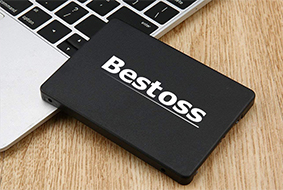
Still not enough memory after upgrading? Slow game loading? If you have these feelings, it means that the development speed of Solid state drives has already caught up with or even surpassed our daily needs—and its future will only bring a more revolutionary experience. Today, Bestoss will take you through the core trends and innovations of the SSD industry to see how these technological breakthroughs will change our computer usage.
Trend 1: Capacity "Ceiling" Continues to Break Through, Large Storage is No Longer a Luxury
Remember a few years ago, 128GB SSDs were the mainstream configuration, and storing just a few movies would quickly lead to a "space shortage" warning. Now, open any e-commerce platform, and 1TB SSDs have become entry-level models, 2TB and 4TB products are becoming increasingly affordable, and even 8TB consumer-grade SSDs are beginning to enter ordinary households. Behind this change is the rapid iteration of storage density technology.
Early SSDs were limited by planar storage technology, and capacity increases always encountered bottlenecks. But now, the mainstream 3D NAND technology is like turning a single-story "bunker" into a "skyscraper," vertically stacking storage units. Currently, the mainstream stacking layer count in the industry has exceeded 100 layers, with some high-end products even reaching over 200 layers—meaning that two or even three times the data can be packed into the same size chip. In the future, as stacking technology matures, consumer-grade SSDs with capacities of 10TB or more may become as common as 1TB SSDs are today. Whether professional photographers are storing a full load of RAW format photos or gamers are installing a dozen AAA titles, they won't have to agonize over "which one to delete."

Trend Two: Speed Upgrades Again, a Leap from "Fast" to "Impactless"
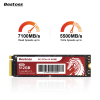
Speed is the core advantage of SSDs replacing mechanical hard drives, and this advantage continues to grow. The PCIe 4.0 SSDs we commonly use now have sequential read speeds exceeding 7000MB/s, nearly 10 times faster than earlier SATA SSDs; the more advanced PCIe 5.0 SSDs are also beginning to hit the market in large quantities, easily exceeding 10000MB/s. What does this speed mean? 10GB 4K video transfer time has been reduced from minutes to tens of seconds; loading screens for large games may be completed almost instantly; even computer boot-up is so fast that you don't even have time to see the motherboard logo.
Besides continuously improving peak speeds, "low latency" has become a new competitive focus. By optimizing the main controller chip's algorithms and interface protocols, future SSDs will be able to respond to data requests more accurately. For example, when dragging the timeline during video editing, the picture will no longer stutter; when multitasking, even opening a dozen or so programs simultaneously will remain smooth. This "seamless" speed experience will make us completely forget about "waiting for data to load."

Trend Three: NAND Flash Memory Technology Iteration, the Art of Balancing Capacity and Performance
If 3D NAND is "space magic," then the upgrade of NAND flash memory cell technology is a "revolution in details." The TLC (three-layer cell) flash memory we are familiar with strikes a good balance between capacity and performance; while now QLC (four-layer cell) flash memory has become the mainstream for high-capacity SSDs. By storing more data in a single storage cell, it significantly increases capacity density, making large hard drives increasingly cheaper.
Some may worry that "more storage layers will lead to lower performance." Early QLC SSDs did have slightly slower read/write speeds and lower durability, but through controller algorithm optimization and caching technology upgrades, current QLC SSDs can meet the daily needs of over 90% of users, such as office work, watching videos, and light gaming. Furthermore, PLC (five-layer cell) flash memory technology, geared towards the future, has achieved breakthroughs in the laboratory. It can achieve higher storage density and may give rise to super SSDs with "capacity comparable to mechanical hard drives, but speeds far exceeding current ones."
Innovation Highlights: AI Enhancement + Security Upgrades – SSDs are More Than Just "Boxes for Storage"
Future SSDs will become increasingly "intelligent." Some high-end SSDs already incorporate AI optimization technology, using machine learning algorithms to analyze user habits, such as identifying frequently used office software and frequently accessed files, and pre-loading this data into the high-speed cache for faster software startup. Simultaneously, AI can intelligently allocate storage unit usage, preventing excessive wear in any area and extending the SSD's lifespan. This "personalized" optimization will allow each SSD to adapt to the needs of different users. Data security has become a key focus of technological innovation. With increasing awareness of privacy protection, future SSDs will integrate more robust security features, such as hardware-based AES-256 encryption, ensuring that even if the drive is lost, others cannot access the data. There will also be one-click secure erase functions, completely wiping data without leaving a trace when replacing an old drive, preventing privacy leaks. For users who frequently store sensitive files, these features are more important than capacity and speed.
Practical Guide: What Trends Should You Keep in Mind When Choosing an SSD?
Faced with a constant stream of new technologies, ordinary users don't need to blindly chase the latest models. Choosing the right product based on your needs is key:
For everyday office work and watching videos: Prioritize QLC SSDs with 1TB or more. They offer high cost-performance and sufficient capacity. Bestoss's entry-level QLC products are a good choice, offering affordable and stable performance.
For gamers and video editors: We recommend PCIe 4.0 interface TLC SSDs. They are fast, durable, and can meet high-load demands.
For professional designers and engineers: Consider high-end SSDs that support AI optimization and hardware encryption, ensuring better data processing efficiency and security.
From hundreds of GB to several TB in capacity, from hundreds of MB/s to tens of thousands of MB/s in speed, the development of SSDs has always revolved around "solving user pain points." In the future, with the continued implementation of technologies such as 3D NAND, AI optimization, and new flash memory, SSDs will become larger in capacity, faster, smarter, and more secure. As a participant in the storage industry, Bestoss will continue to follow these technological trends and bring higher-quality SSD products to everyone.
If you want to know which SSD to choose for different scenarios, or if you want to get the latest product specifications, go directly to the Application section of the Bestoss website and we will provide you with personalized advice.


By continuing to use the site you agree to our privacy policy Terms and Conditions.
 Language